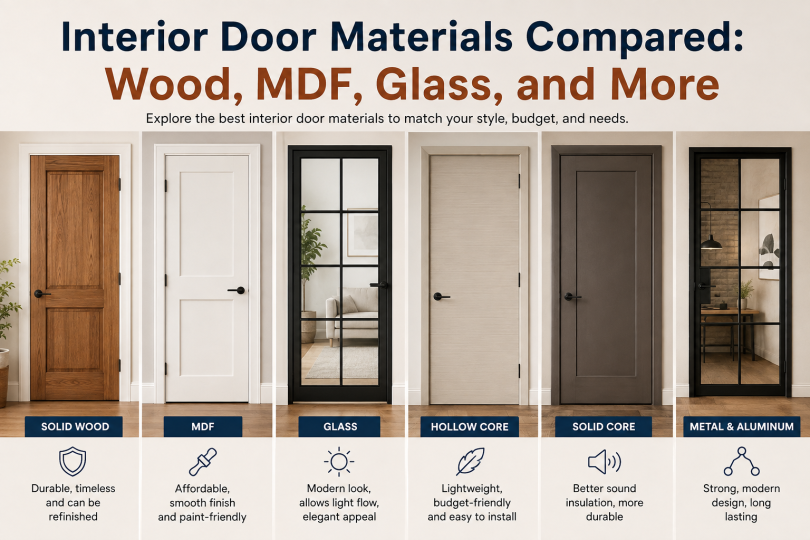

Choosing the right interior door is about much more than appearance. The material you select affects durability, maintenance, sound insulation, moisture resistance, and the overall feel of your home. Whether you are renovating a single room or building a new property, understanding the strengths and weaknesses of different door materials can help you make a smarter investment.
Today’s market offers a wide range of interior doors designed to suit different budgets and design preferences. From classic solid wood to affordable MDF and elegant glass options, each material serves a unique purpose. If you are exploring interior doors for sale, comparing materials before making a purchase will help you find a product that meets both your style and practical needs.
Why Door Material Matters
Every room in a home has different requirements. A bedroom benefits from privacy and sound reduction, while a pantry or home office may prioritize appearance or accessibility. The material of an interior door influences how well it performs over time.
Factors worth considering include:
- Durability and lifespan
- Maintenance requirements
- Resistance to humidity
- Noise reduction
- Appearance
- Installation cost
- Long-term value
Understanding these qualities makes it easier to choose interior house doors that fit your home’s layout and lifestyle.
Solid Wood Doors: The Classic Choice
Solid wood remains one of the most desirable materials for homeowners who value quality, craftsmanship, and timeless style. These doors are made from natural hardwood or softwood and offer exceptional strength.
Some of the most common wood species include oak, maple, walnut, pine, and mahogany. Each brings its own unique grain patterns and color variations.
Advantages of solid wood include:
- Outstanding durability
- Excellent sound insulation
- Premium appearance
- Long lifespan
- Can be refinished multiple times
Solid wood is often selected for high end interior doors because of its luxurious appearance and exceptional craftsmanship. These doors can complement traditional, rustic, farmhouse, and contemporary interiors alike.
However, wood also has some limitations. It is generally more expensive than engineered materials and may expand or contract when exposed to significant humidity changes. Proper sealing and finishing help reduce these concerns.
MDF Doors: Affordable and Versatile
Medium Density Fiberboard, commonly known as MDF, has become one of the most popular choices for modern homes. MDF is manufactured by compressing fine wood fibers with resin under high pressure, creating a smooth and stable surface.
Many homeowners choose an MDF interior door because it offers an excellent balance between affordability and appearance.
Benefits include:
- Budget-friendly pricing
- Smooth surface for painting
- Resistant to warping
- Consistent finish
- Easy maintenance
Unlike natural wood, MDF contains no visible grain, making it ideal for painted finishes. It is commonly used in modern minimalist interiors where clean lines and uniform colors are preferred.
While MDF performs well indoors, it is not as impact-resistant as solid wood. Heavy blows can dent the surface more easily than hardwood.
Glass Doors: Brightness and Modern Appeal
Glass doors have become increasingly popular in contemporary homes because they allow natural light to move freely between rooms.
Instead of creating dark hallways or enclosed spaces, glass panels make interiors feel brighter and more spacious.
Common glass options include:
- Clear glass
- Frosted glass
- Textured glass
- Decorative etched glass
- Tinted glass
Many glass doors combine wooden or aluminum frames with decorative glass inserts, providing both style and stability.
Glass works particularly well for:
- Home offices
- Dining rooms
- Living rooms
- Libraries
- Sunrooms
Frosted or textured glass maintains privacy while still allowing light to pass through, making it suitable for bathrooms and laundry rooms.
Although glass is attractive, it offers less sound insulation than solid materials and usually requires more frequent cleaning.
Hollow Core Doors: Budget-Friendly Solutions
Hollow core doors remain one of the most widely installed options in residential construction.
Despite the name, these doors are not completely hollow. They usually contain lightweight honeycomb cardboard or similar structural material between thin wood or fiberboard panels.
Advantages include:
- Low purchase cost
- Lightweight construction
- Easy installation
- Minimal stress on hinges
- Wide variety of styles
These doors are commonly used in bedrooms, closets, and utility spaces where heavy-duty performance is unnecessary.
Their primary disadvantage is reduced sound insulation and lower durability compared to solid alternatives.
Solid Core Doors: The Best of Both Worlds
Solid core doors combine engineered wood construction with a dense interior core that mimics many benefits of natural wood.
Many homeowners choose this option because it provides impressive performance without the higher price associated with solid hardwood.
Benefits include:
- Better sound reduction
- Greater durability
- Improved stability
- More affordable than solid wood
- Attractive appearance
For families seeking quality interior doors for houses without exceeding their renovation budget, solid core models often provide outstanding value.
Aluminum and Metal Frame Doors
Metal-framed interior doors have gained popularity in industrial and contemporary home designs.
Black aluminum frames paired with clear or frosted glass create clean architectural lines that complement modern interiors.
These doors offer:
- High structural strength
- Modern aesthetics
- Rust-resistant finishes
- Slim frame profiles
- Long-lasting performance
Although they cost more than standard MDF models, they deliver a unique design statement that many homeowners appreciate.
Comparing Materials Side by Side
Selecting the right material depends on your priorities.
Solid Wood
- Highest durability
- Premium appearance
- Excellent insulation
- Higher price
MDF
- Affordable
- Paint-friendly
- Stable construction
- Moderate durability
Glass
- Maximizes natural light
- Elegant appearance
- Lower privacy
- Requires regular cleaning
Hollow Core
- Lowest cost
- Lightweight
- Limited soundproofing
- Shorter lifespan
Solid Core
- Excellent balance of price and quality
- Good sound insulation
- Strong construction
- Suitable for most rooms
Metal and Glass
- Contemporary style
- Durable framing
- Premium pricing
- Ideal for modern homes
Choosing Materials for Different Rooms
Not every room requires the same type of door. Matching materials to room function leads to better long-term satisfaction.
Bedrooms
Solid core or solid wood offers greater privacy and noise reduction.
Bathrooms
Moisture-resistant MDF or properly sealed wood performs well in humid conditions.
Living Rooms
Glass or decorative wood doors enhance visual appeal while maintaining openness.
Home Offices
Solid core doors help reduce distractions and improve concentration.
Closets
Hollow core doors provide a practical and economical solution.
Matching the right material to each room allows homeowners to balance appearance, function, and budget effectively.
Maintenance Requirements
Different materials require different levels of care.
Wood doors benefit from occasional refinishing to preserve their natural beauty.
MDF doors need only routine cleaning using a damp cloth and mild detergent.
Glass doors require regular wiping to remove fingerprints and smudges.
Metal-framed doors generally need minimal maintenance beyond periodic cleaning.
Regardless of material, homeowners should periodically inspect hinges, handles, and alignment to ensure smooth operation.
Style Considerations for Every Home
Today’s manufacturers produce doors interior in virtually every design imaginable.
Popular styles include:
- Flush doors
- Shaker doors
- Panel doors
- French doors
- Barn doors
- Pocket doors
- Contemporary slab doors
Material selection should complement the home’s flooring, cabinetry, wall colors, and architectural style.
For example:
Natural oak pairs beautifully with traditional interiors.
Painted MDF complements modern spaces.
Glass creates openness in smaller homes.
Black metal frames suit industrial-inspired designs.
Selecting complementary finishes helps every room feel cohesive.
Finding the Right Balance Between Cost and Quality
Budget naturally influences purchasing decisions, but focusing solely on price can result in disappointing long-term performance.
Homeowners should evaluate:
- Expected lifespan
- Maintenance costs
- Daily usage
- Design preferences
- Overall home value
In many cases, investing slightly more upfront results in lower replacement costs over the years.
If you are shopping for interior doors for homes, compare construction quality as carefully as appearance. Well-built products often perform significantly better throughout their service life.
Likewise, choosing the right interior door for homes should involve balancing style with functionality rather than selecting purely on aesthetics.
For premium renovations, high end interior doors can elevate the entire appearance of a property while adding lasting value.
Even when selecting an interior door for houses on a moderate budget, engineered materials like solid core construction often provide an excellent compromise between affordability and performance.
Making a Choice You’ll Appreciate for Years
The ideal door material depends on your home’s design, daily lifestyle, and long-term expectations. Solid wood delivers unmatched elegance, MDF offers exceptional value, glass creates brighter living spaces, while solid core doors provide an excellent combination of durability and affordability. Hollow core options remain practical for budget-conscious projects, and modern metal-framed designs bring a sophisticated architectural touch.
By understanding the strengths of each material before shopping, homeowners can confidently select interior doors that enhance comfort, appearance, and functionality. Whether you’re comparing interior doors for sale for a complete renovation or replacing a single interior door, choosing the right material today will contribute to a more beautiful and practical home for many years to come.